
What does FBO stand for?
FBO stands for Fixed Base Operator. The term originated in the United States and refers to a company that provides services for general aviation and, in particular, for business aviation. Simply put, an FBO is the central point of contact for private jets, business travelers, crews, and aircraft operators at an airport. While passengers on scheduled flights use the familiar terminals, private aircraft are typically handled through a separate FBO building.
What services does an FBO provide?
A modern FBO offers far more than just a waiting area for passengers. Among its most important services are:
Passenger and crew support
Organization of ground handling services
Aircraft refueling
Parking positions for aircraft
Customs and immigration processing
Transportation and limousine services
Flight planning and weather briefings
Assistance with special requests and VIP services
The goal is to handle aircraft as efficiently as possible while offering passengers the highest level of comfort and privacy.
Why are FBOs so important for business aviation?
Business aviation is characterized by flexibility, time savings, and customized travel planning. These very advantages would be virtually impossible without professional FBOs. An FBO ensures that:
Aircraft are processed quickly
Passengers can travel without long walks or wait times
Crews have optimal working conditions
Flight operations are coordinated smoothly
Especially on international business trips, every minute often counts. A well-organized FBO plays a crucial role in ensuring that flights can be operated on time and efficiently.
The Difference Between an FBO and a Regular Airport Terminal
Many travelers initially compare an FBO to a terminal. In fact, however, the two are fundamentally different. While commercial airport terminals are designed to handle large passenger flows, an FBO focuses on personalized service and short distances. Typical features of an FBO include:
Exclusive lounges
Personalized service
Greater discretion
Direct access to the aircraft
Individualized support for passengers and crews
For business travelers, this often means a significantly more efficient travel experience.
FBOs as an Airport’s Business Card
For many international business travelers, the FBO is their first point of contact with a destination. Consequently, the demands on service quality, efficiency, and professionalism are exceptionally high.
Modern FBOs combine operational excellence with hospitality and create an environment where passengers, crews, and aircraft operators alike feel at ease.
Modern FBOs Emphasize Innovation and Sustainability
Today, the requirements for a modern FBO go far beyond traditional ground handling services. A key component is the use of modern ground support equipment (GSE). Innovative technologies not only enable faster and safer operations on the tarmac but also reduce emissions and noise pollution.
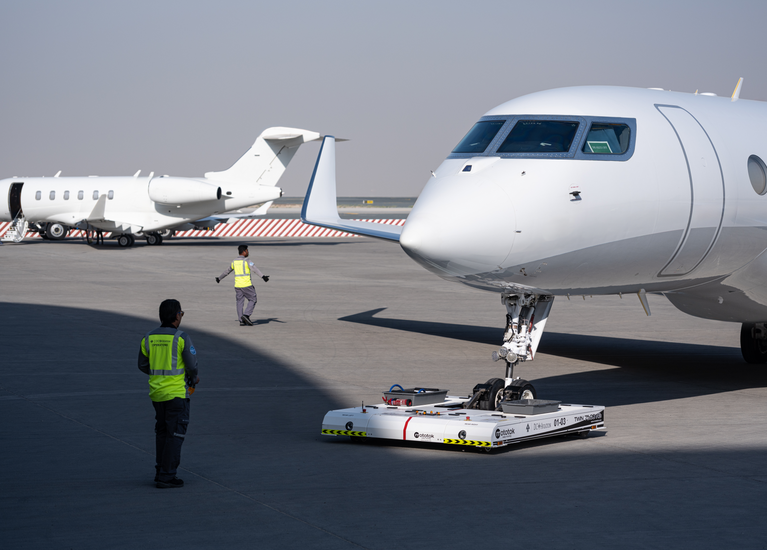
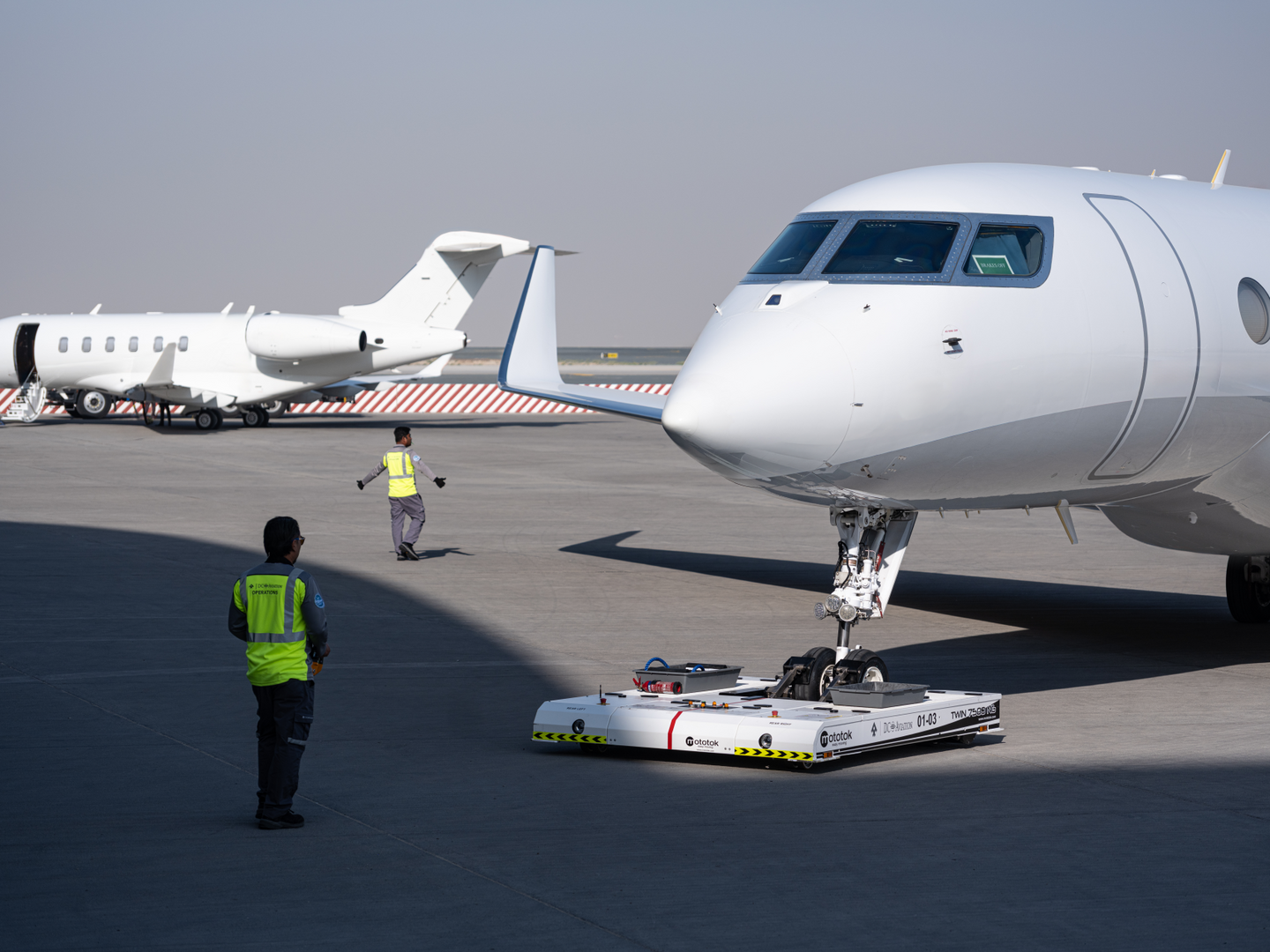
For example, at our locations in Munich/Oberpfaffenhofen, Dubai and Stuttgart, we use modern Mototok tow tractors. These remote-controlled, electric pushback and tow vehicles enable particularly precise and efficient handling of business jets and help further optimize apron operations.
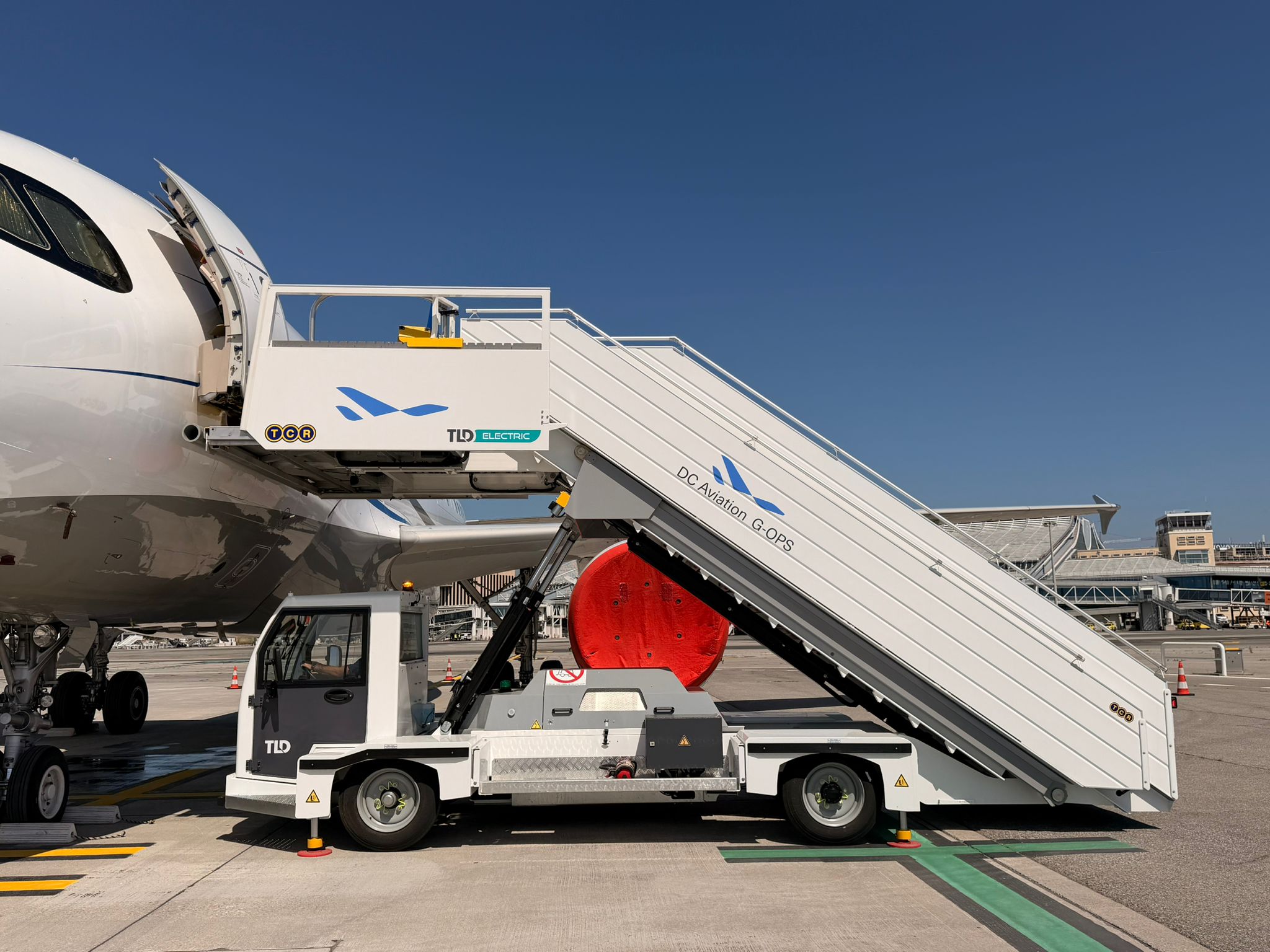
We are also continuously investing in our infrastructure in the area of sustainability. At our location in Nice, the entire ground support equipment fleet has been converted to electric and, in some cases, even solar-powered vehicles and equipment. This allows us to significantly reduce local emissions and make an active contribution to a more sustainable business aviation industry.
How can you recognize a high-quality FBO?
Not every FBO offers the same scope of services or the same quality standards. In international business aviation, therefore, recognized certifications and industry networks play an important role.
One key indicator of quality, for example, is IS-BAH certification (International Standard for Business Aircraft Handling). This globally recognized standard confirms that an FBO meets defined requirements in the areas of safety, quality, and operational processes.
In addition, renowned networks such as Air Elite by World Fuel serve as important guides for aircraft operators, crews, and passengers. Membership is by invitation only and is based on strict quality criteria. It is particularly noteworthy that, as a rule, only one FBO per airport is admitted to the network.
Our FBOs also adhere to these high international standards. We operate facilities in Munich/Oberpfaffenhofen, Dubai, Malta, and Nice.
All of our FBOs are certified according to IS-BAH. Furthermore, our locations in Dubai and Nice are part of the exclusive Air Elite network and thus belong to a select group of FBOs that are recognized worldwide for outstanding service, the highest safety standards, and excellent customer experiences.
For aircraft operators, crews, and passengers, this means reliable quality, professional processes, and a level of service that meets the demands of international business aviation.
Conclusion: The Heart of Business Aviation
An FBO is far more than just a building at the airport. It is the central interface between the aircraft, crew, passengers, and airport infrastructure.
Without FBOs, the flexibility and efficiency of business aviation would be virtually unthinkable. They ensure that flight operations run smoothly and that travelers experience the comfort for which business aviation is known worldwide.
Anyone who has ever taken a look behind the scenes of a modern FBO quickly understands why these facilities are considered the heart of business aviation.