Why crew training at DC Aviation Group knows no compromises
In business aviation, safety is the highest priority. It cannot be bought or enforced. It can only be lived. Every day, on every flight. That is exactly what we do at DC Aviation Group. Our goal is not only to meet legal requirements, but to exceed them. For our customers, for our crews and for every aircraft we operate.In business aviation, safety is the highest priority. It cannot be bought or enforced. It can only be lived. Every day, on every flight. That is exactly what we do at DC Aviation Group. Our goal is not only to meet legal requirements, but to exceed them. For our customers, for our crews and for every aircraft we operate.
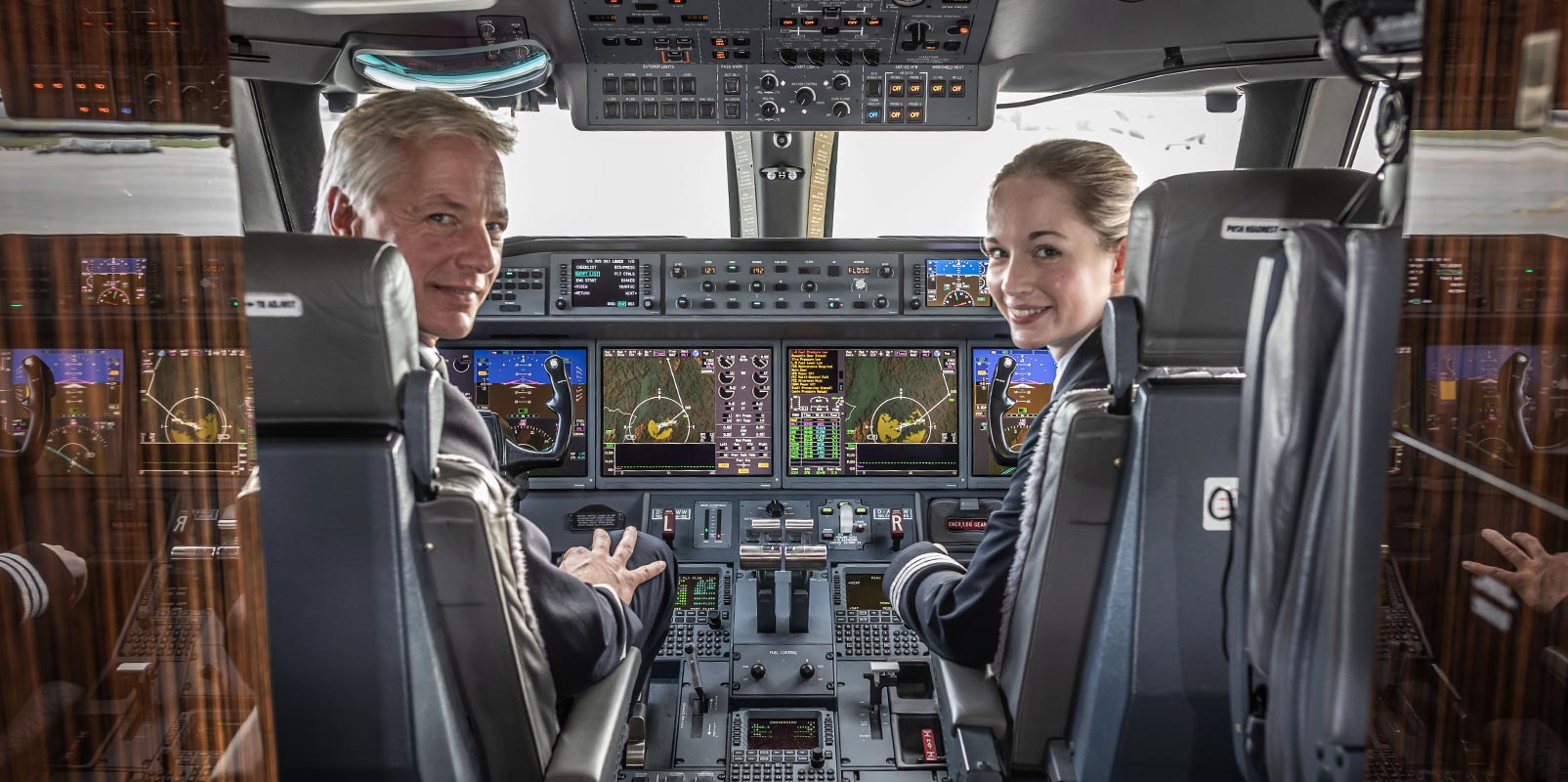
We set the highest standards right from the start when selecting our pilots. A comprehensive selection process ensures that professional qualifications, experience and personality are a good fit. Our operational safety strategy is based on these personal qualifications. Clear procedures are a central component of this strategy. Standard Operating Procedures (SOPs) define exactly who performs which tasks in the cockpit, both in normal operation and in critical situations. Every action is well thought out and standardized to minimize errors and ensure a consistently high level of safety.
Specialization reduces risks
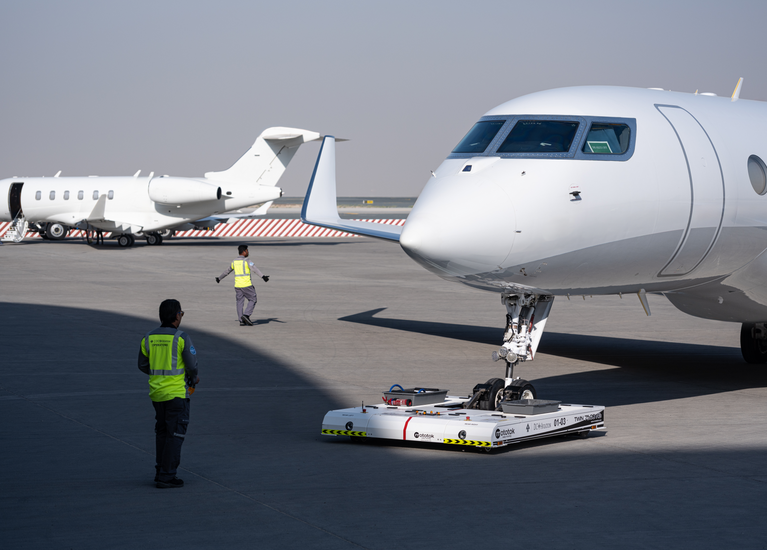
Another important factor is specialization in a particular type of aircraft. A pilot who flies a Citation XLS+ is not allowed to fly a Falcon. Gulfstream pilots work exclusively on aircraft of this type with identical avionics. Those who know a system in detail act more safely. This principle has proven itself not only in aviation, but also in other safety-critical areas.
At DC Aviation, we know that you cannot predict emergencies, you can only prepare for them.
Simulator training: Every six months, our crews train for emergency situations such as engine failure, fire on board or power failure. And they do so under extreme weather conditions and with particularly challenging airports.
Check flights: In addition, they complete a four-hour check flight in the simulator to test their knowledge in practice.
Peer review: Twice a year, our pilots are assessed by experienced captains in real flight operations.
But safety does not end in the simulator. Throughout the year, our crews train for other scenarios:
First aid and emergency management
Dealing with thunderstorms and difficult weather conditions
This is how we ensure that our crews can act confidently in any situation.
Although these training courses exceed the legal requirements and involve additional investment, they underline our clear commitment to putting safety first.
Just Culture to learn from mistakes
Another element that strengthens our safety is a culture of learning from mistakes. Mistakes are not punished, but analyzed. The aim is to improve processes and identify risks at an early stage. This openness makes us safer in the long term and our customers can rely on us to learn from every scenario.
Safety comes from experience, discipline, training and a corporate culture that embraces responsibility. At DC Aviation Group, this is exactly where we place our focus. Our crews are well prepared, our processes are well thought out, and our standards exceed legal requirements.